
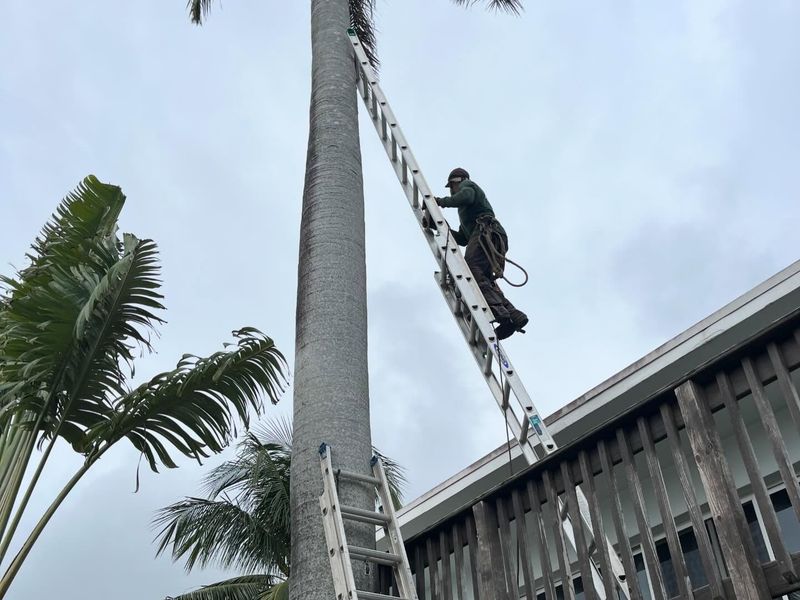
Tree care
Tree trimming and pruning, done to arborist standards
Good pruning makes a tree stronger, safer and better looking. Bad pruning invites decay and weak regrowth. We prune hardwoods to ANSI A300 standards, with ISA Certified Arborist James A. Dumas behind the work.
- ISA Certified Arborist
- Licensed & insured
- Free estimates
- 25 years in business
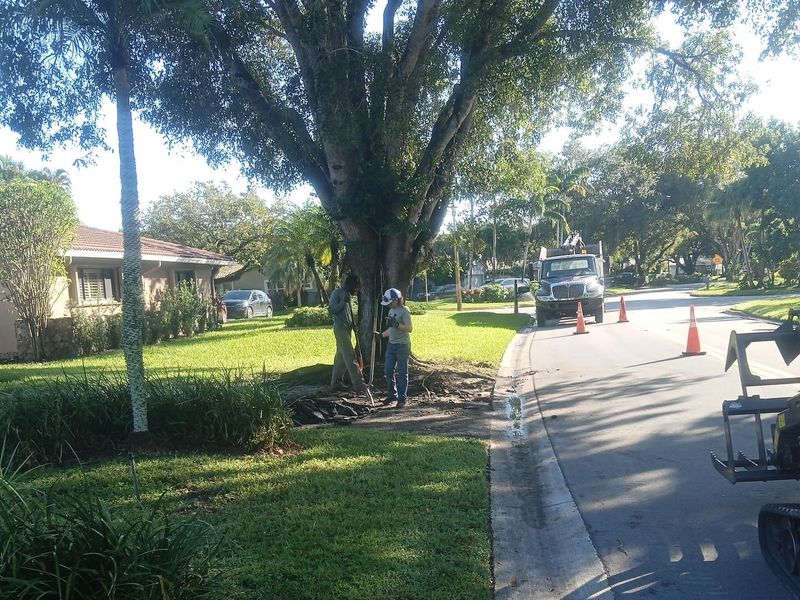
What's included
Pruning for health, safety and looks
Every tree is different, so we start by looking at what yours actually needs. Most jobs combine a few of these.
Dead, broken and crossing limbs
We remove dead wood, storm-broken branches and limbs that rub against each other, which are the usual entry points for decay.
Canopy thinning
Selective cuts open up a dense crown so light and wind pass through, without stripping the tree or leaving it lopsided.
Canopy raising
Low branches over driveways, sidewalks, pool cages and lawns are lifted so people, cars and mowers can pass underneath.
Roof and structure clearance
Limbs pulled back from roofs, walls, fences and screen enclosures before they cause damage.
Fruit and shade trees
Mango, oak, ficus and other common South Florida trees, pruned to keep them productive and manageable.
Health check while we're up there
Our team looks for pests, disease and structural problems that could put the tree at risk, and tells you what we see.
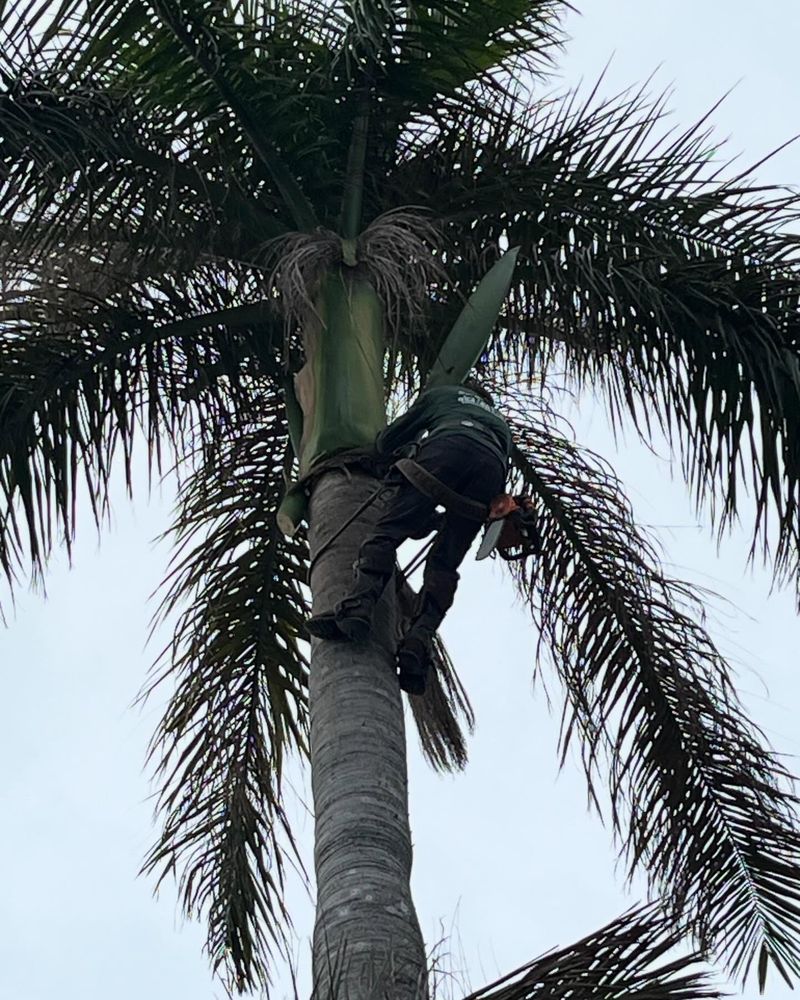
Why standards matter
There's a right way to cut a tree
ANSI A300 is the national standard for tree care in the United States. It covers where to make a cut, how much of a canopy to remove at once, and practices to avoid, like topping, which leaves a tree weak and full of fast, poorly attached regrowth.
We trim all hardwoods and palms using those guidelines. Pruning that follows them heals better, looks natural and holds up better in strong winds.
- No topping or "lion-tailing" a tree down to bare limbs
- Cuts made at the branch collar so wounds close properly
- The right amount of canopy removed for the species and the tree's health
- Watering problems flagged, because trees need good irrigation for a long life
James A. Dumas, ISA Certified ArboristWhat that means for your trees
How it works
From first call to clean yard
Reach out
Call 754-245-2069 or send the estimate form. Photos help but aren't required.
Free on-site estimate
We look at the job in person and give you an accurate, realistic price. No one-size-fits-all quotes.
The work
Our crew shows up when we said we would and works carefully around your home, plants and property.
Cleanup
Debris is loaded and hauled off. We leave the property as clean as we found it, or cleaner.
Questions
Tree trimming FAQ
How often should my trees be trimmed?
It depends on the species, its age and where it's growing. Young trees benefit from structural pruning early on, and mature shade trees usually need attention every few years. We'll recommend a schedule once we've seen your trees.
Should I trim my trees before hurricane season?
Yes, it's a good time. Removing dead and weak limbs and thinning a dense canopy reduces the chance of breakage in high winds. Over-thinning does the opposite, so the goal is the right cuts, not the most cuts.
Do you clean up after trimming?
Always. Branches and debris are loaded onto our trucks and hauled away, and the work area is cleaned up before we leave.
Do you trim fruit trees like mangoes?
Yes. We regularly thin and prune mango trees and other fruit trees to keep them healthy, a manageable height and easier to harvest.
Related services
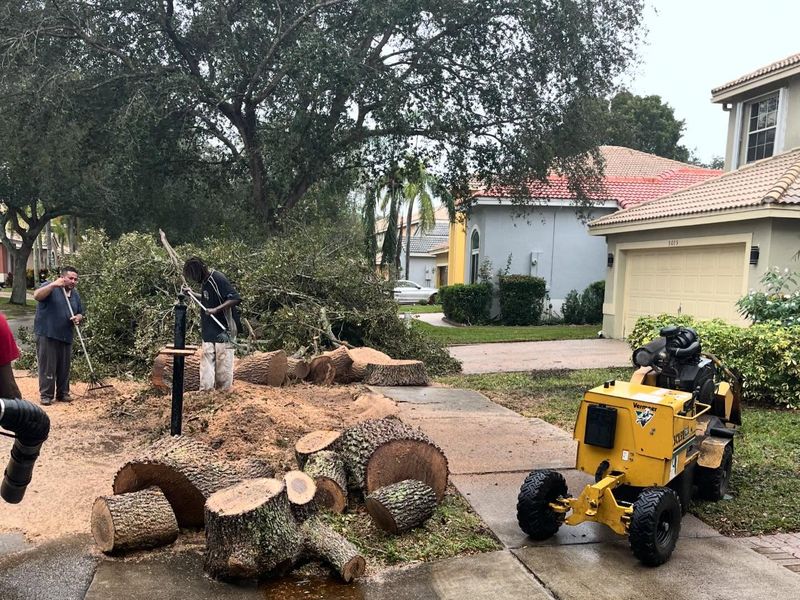
Tree Removal
When a tree is dead, dangerous or in the wrong place, we take it down safely.
Learn moreCertified Arborist Services
Tree assessments and arborist reports from an ISA Certified Arborist.
Learn moreGet a free tree trimming estimate
Tell us what you need and add a photo or two if you have them. We'll come out, take a look and give you an accurate, realistic estimate. Free, with no obligation.